
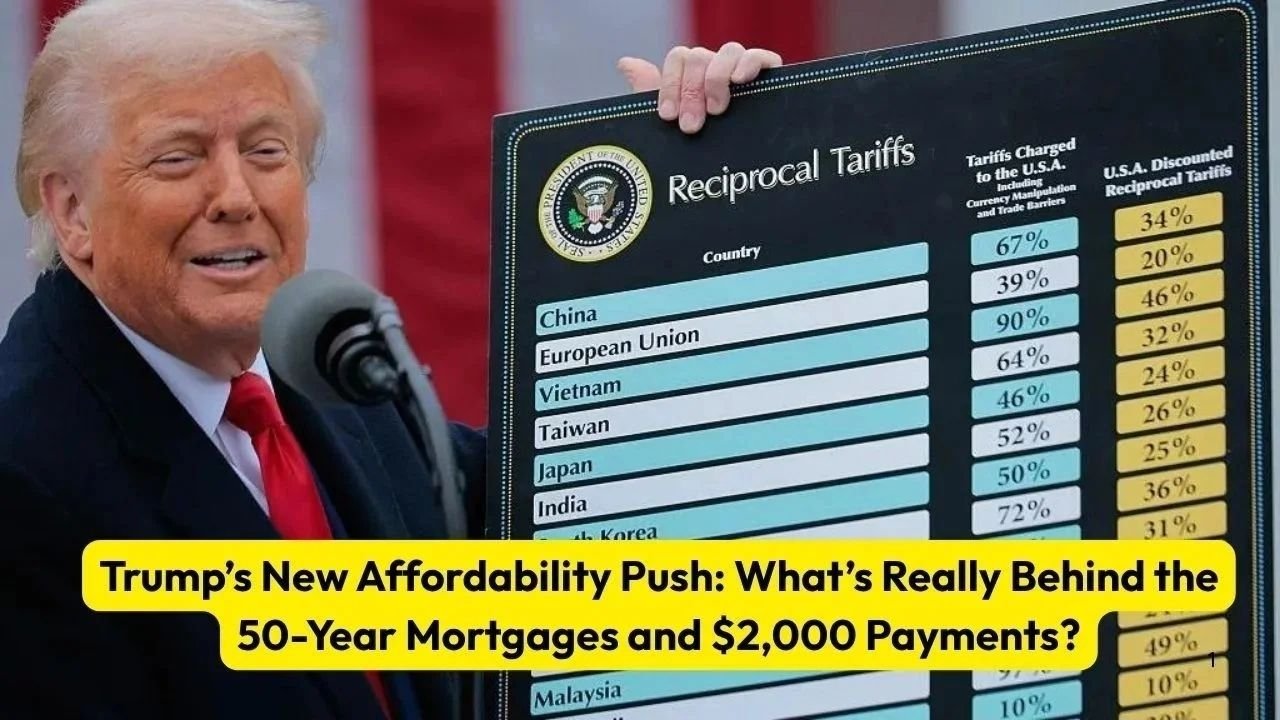
Americans are still feeling the squeeze of high prices, and the White House is racing to respond. After disappointing off-year election results and rising frustration over everyday costs, President Donald Trump has launched a new wave of affordability ideas. From $2,000 direct payments to ultra-long mortgages, the proposals sound bold—but are they realistic? Here’s a clear, simple, and SEO-friendly breakdown.
Why Affordability Is Trump’s New Priority
Recent state election losses sent a sharp message: voters want relief from rising expenses. Exit polls showed the cost of living—food, rent, fuel, utilities—has become the top national concern. To regain voter confidence, the administration is now pushing affordability to the front of its agenda.
The $2,000 Payment Idea: Popular but Unlikely
What the Proposal Claims

The administration is promoting the idea of $2,000 direct deposits for U.S. citizens, describing them as tariff-funded “rebate-style payments.”
Why Experts Don’t Expect It to Happen
Economists and policy analysts point out major issues:
- Tariff revenue is too small to fund nationwide payments.
- Even a limited version could cost over $300 billion.
- The government would likely need to borrow to fund it.
- Large cash payouts may push prices upward, similar to pandemic-era inflation.
Even Treasury Secretary Scott Bessent has hinted that tariff funds may be used for tax cuts instead—not direct checks—showing internal disagreement.
The 50-Year Mortgage Proposal: Lower Payments, Higher Lifetime Costs

Another headline proposal is a 50-year mortgage option, aimed at lowering monthly payments for new homebuyers.
Why Supporters Like It
- Lower monthly mortgage bills
- Makes it easier for first-time buyers to qualify
- Could help buyers in high-cost markets
Why Critics Strongly Oppose It
- Homeowners pay far more interest over time
- Many borrowers may never fully pay off the loan
- Benefits favor banks and developers more than families
Even conservative lawmakers have pushed back, saying it does not address the real issue: the lack of affordable housing supply.
Other Affordability Ideas Being Tested
The administration is also floating:
- Turning federal insurance subsidies into cash payments
- Investigating high beef prices
- Exploring lower-cost access to popular weight-loss medications

However, all these ideas would need congressional approval. With thin Republican majorities, passage is uncertain.
A Strategy of Rapid Policy Testing
Analysts note that many of these proposals are announced quickly—sometimes before advisers can analyze them fully. The goal appears to be testing ideas in real time, watching public reactions, and adjusting the strategy.
Meanwhile, the White House highlights falling prices for eggs and dairy but avoids categories still rising, such as beef and electricity. Inflation has eased to around 3%, down from the previous peak of 9.1%, but voters remain skeptical about long-term stability.
FAQs
1. Will Americans actually receive $2,000 checks?
At this point, unlikely. Congress would need to approve the plan, and support is weak.
2. Do 50-year mortgages make homes more affordable?
Monthly payments are lower, but buyers pay far more interest overall, making long-term costs much higher.
3. Can tariff revenue fully fund $2,000 payments?
No. Current tariff income is nowhere close to the amount required for nationwide checks.
4. Are prices finally improving?
Some categories have dropped, but many essential costs—especially food, rent, and electricity—remain high.
5. Why is Trump announcing so many ideas at once?
Recent election results showed deep voter frustration, prompting a fast rollout of affordability-themed proposals.
Conclusion: Big Promises, Unclear Outcomes
Trump’s new affordability push is bold, headline-friendly, and clearly aimed at frustrated voters. But without reliable funding sources, strong bipartisan support, or detailed planning, many of these proposals may remain political talking points rather than real solutions. For now, Americans are watching closely to see which ideas—if any—move from speeches to reality.